

Australian buyers are embracing electric vehicles (EVs) at a pace few would have predicted.
In May 2026, battery electric vehicles accounted for a record 22% of all new vehicle sales in Australia, more than doubling their share compared to the same time last year.
Many Australians who were previously sitting on the fence are asking the same question: is now the right time to make the switch? The answer is not universal.
The biggest mistake consumers make is assuming an EV is either a guaranteed financial win or a guaranteed financial mistake. The reality sits somewhere in the middle.
An EV can save you thousands of dollars over time, but it can also create financial risks that many buyers fail to account for before signing a finance contract.
If you’re considering financing an EV in 2026, understanding the trade-offs matters.
Why EV sales are surging
Many factors are driving the recent surge in EV adoption.
The disruption to global oil markets following tensions in the Middle East pushed many Australians to reconsider their reliance on petrol-powered vehicles.
Unlike petrol or diesel vehicles, the operating cost of an electric vehicle is largely disconnected from global oil markets. Electricity costs may fluctuate, but not to the same extent as fuel prices. For many households and businesses, particularly those with access to home solar systems, vehicle operating costs become substantially more predictable.
UFinancial Asset Finance Director, Andrew Westblade, says “government incentives like the Fringe Benefits Tax exemption for eligible electric vehicles have also accelerated adoption.” For many employees, the after-tax savings can be substantial, often making an EV cheaper to run than an equivalent petrol vehicle despite a higher purchase price.
At the same time, manufacturers have flooded the market with more affordable options.
Today, Australians can choose from dozens of electric models across a wide range of price points. Competition from Chinese manufacturers, in particular, has placed downward pressure on pricing and increased accessibility for everyday buyers.
Additionally, infrastructure is improving.
While public charging remains a challenge in some regional areas, Australia’s charging network continues to expand, and industry leaders are highlighting infrastructure growth as a key factor supporting long-term EV adoption.
These factors explain why demand continues to rise. However, popularity alone is not an indication of financial suitability.
The finance conversation about electric vehicles most buyers aren’t having
When most Australians compare vehicles, they focus on the purchase price. But the total cost of ownership over the life of the loan is often overlooked.
This is where many EV buyers discover that the picture is more complicated than the marketing suggests.
"“When most Australians compare vehicles, they focus on the purchase price. But the total cost of ownership over the life of the loan is often overlooked.”"
Green loans aren’t always the advantage they appear to be
“Many lenders now offer green car loans with preferential interest rates for eligible electric vehicles”, says Andrew.
While that sounds like an easy win, lenders are increasingly conscious of EV depreciation trends. As a result, when assessing EVs, more conservative loan-to-value ratios can be used, particularly for used models.
This may mean borrowers need a larger deposit or are unable to finance the same proportion of the purchase price compared with an equivalent petrol vehicle.
Used EV buyers face an additional challenge.
While used electric vehicles can generally be financed without difficulty, interest rates may be around one percentage point higher than comparable new vehicle finance. Some lenders may also shorten loan terms based on battery age or remaining warranty coverage.
The result is that the affordability advantage can narrow once financing costs are properly considered.
The used EV market is resetting values
One of the most significant developments occurring right now is the arrival of large volumes of ex-fleet and salary-sacrifice vehicles into the used market.
That increased supply, as well as the development of superior technology, is creating downward pressure on resale values.
According to Andrew, for consumers purchasing used EVs, this presents an opportunity. “There are bargains available that simply did not exist a few years ago.”
But for owners who purchased new during the earlier stages of EV adoption, the implications here can be less attractive.
Some drivers may discover their vehicle’s market value has fallen faster than expected, particularly if they financed the vehicle with a relatively small deposit. In some cases, this creates the possibility of negative equity, where the outstanding loan balance exceeds the vehicle’s current value.
This is not unique to EVs, but rapid technological change and growing competition can accelerate the effect.
“For anyone considering asset finance, understanding potential future resale value should be part of the conversation from day one.”
Insurance is the hidden cost many buyers overlook
Research suggests EV insurance premiums can be anywhere from 20 to 30% higher than equivalent petrol vehicles, depending on the model and insurer.
A key reason is battery systems, which remain expensive to repair or replace. High-voltage components require specialised technicians, and advanced driver assistance systems often need recalibration after even relatively minor accidents.
For many electric vehicles, repair costs remain materially higher than traditional vehicles, and this has a compounding effect.
An additional $500 to $1,000 per year in insurance premiums may not seem significant in isolation, but over a five-year finance term it becomes a meaningful contributor to total ownership costs.
Consumers who ignore this component often end up comparing an EV’s charging costs against a petrol vehicle’s fuel costs without analysing other important expenses.
EV tax incentives are powerful, but policy can change
“Tax incentives have been one of the biggest reasons several of our clients have made the switch to electric,” pinpointed Andrew.
The Fringe Benefits Tax (FBT) exemption for eligible electric vehicles has transformed the economics of novated leasing. “For many employees on higher marginal tax rates, the difference between a fully exempt electric vehicle and an FBT-liable petrol vehicle can exceed tens of thousands of dollars over the life of a lease.”
However, these exemptions will begin to reduce gradually after March 2027.
Moreover, even where FBT is exempt, a Reportable Fringe Benefits Amount may still appear on income statements. This can influence HECS repayments, Medicare Levy Surcharge calculations and eligibility for certain government benefits.
These factors rarely appear in simple online comparisons, but they can materially influence outcomes of making the switch.
Unconsidered charging costs
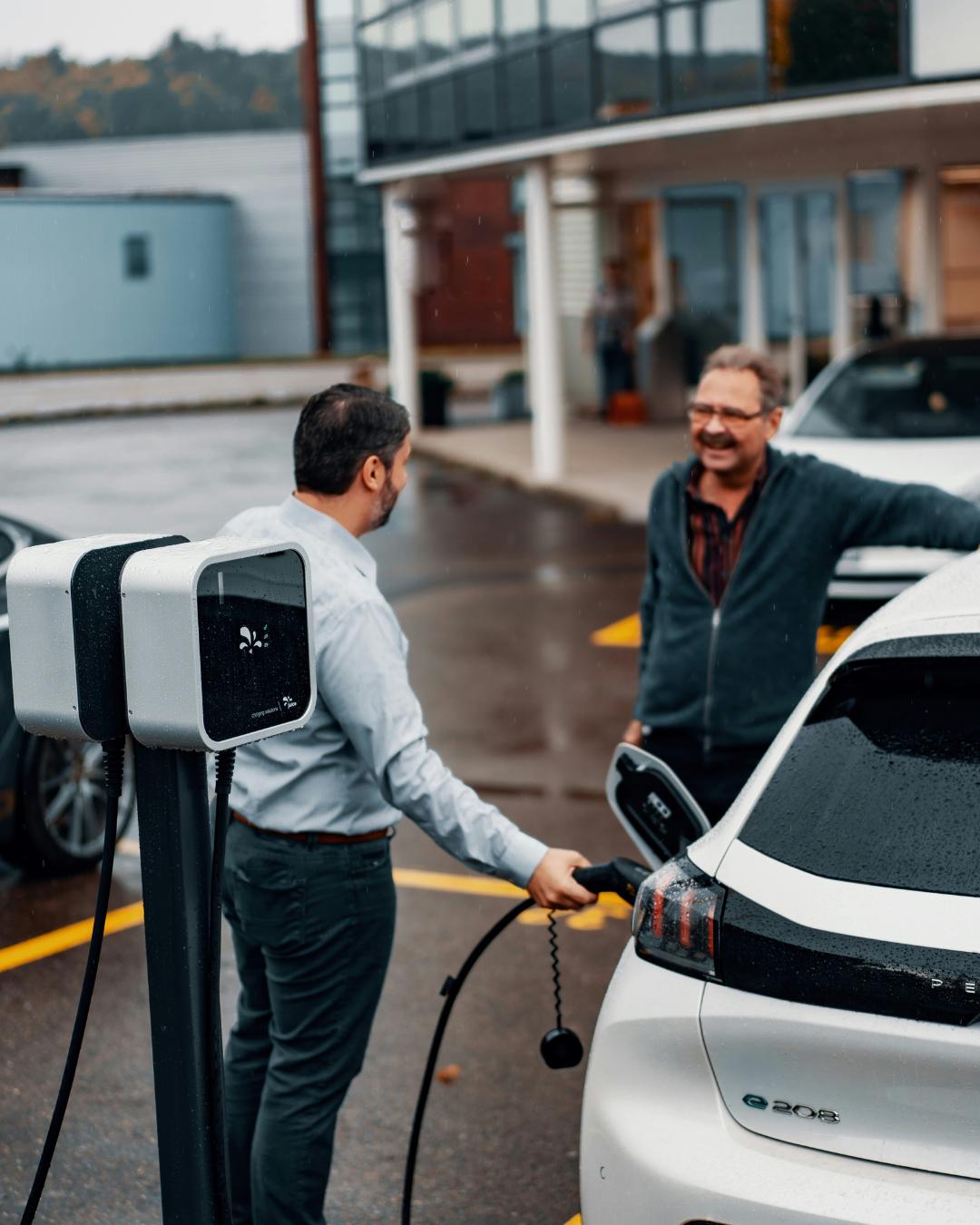
Apartment residents and renters may rely more heavily on public charging networks.
Most EV owners install a dedicated charger for convenience and faster charging speeds. Installation costs can range from hundreds to several thousand dollars and should be factored into the total ownership equation.
Moreover, homeowners with off-street parking and solar systems often achieve the lowest running costs, while apartment residents and renters may rely more heavily on public charging networks with higher costs and less convenience.
The battery conversation
Battery degradation is a real issue.
Even when a battery does not require replacement, reduced range can influence an EV’s resale value.
Replacement costs can vary dramatically depending on vehicle type and battery size, ranging from a few thousand dollars to well over $20,000 in some circumstances.
That said, evidence suggests modern EV batteries are proving quite durable; most batteries are expected to last well over a decade.
Warranty protection is also stronger than many people realise. Many manufacturers provide battery warranties of around eight years with minimum capacity guarantees.
If buyers plan to keep a vehicle for ten years or more, battery health becomes a genuine financial consideration. But, if their plan is to replace the vehicle within five years, it may be far less relevant.
So, is an electric vehicle worth it?
Electric vehicles are becoming a permanent part of Australia’s automotive landscape, and the recent surge in sales suggests consumer confidence is continuing to build.
The operating cost advantages of EVs remain attractive. Lower servicing costs, reduced exposure to petrol prices and significant tax incentives continue to create strong financial arguments for EV ownership.
But those benefits only materialise when the vehicle, financing structure and ownership strategy are aligned.
A crucial mistake is assuming fuel savings automatically outweigh every other factor. In actuality, insurance premiums, depreciation, battery warranty coverage, tax policy and loan structure are integral to the discussion.
Before committing to a purchase, you should understand the full cost of ownership, how the vehicle is likely to depreciate, what insurance will cost, whether tax incentives genuinely apply to your situation, and how the finance structure affects your cash flow.
At UFinancial, we help Australians navigate these questions through tailored asset finance solutions.
With EV adoption accelerating, new models entering the market, and government incentives remaining available today, now is the right time to assess your options. Reach out to our asset finance team today!
If you want clearer guidance before your next financial move, speak with UFinancial. We can help you review your lending, cash flow and broader financial position so your next decision is backed by strategy, not guesswork.

