
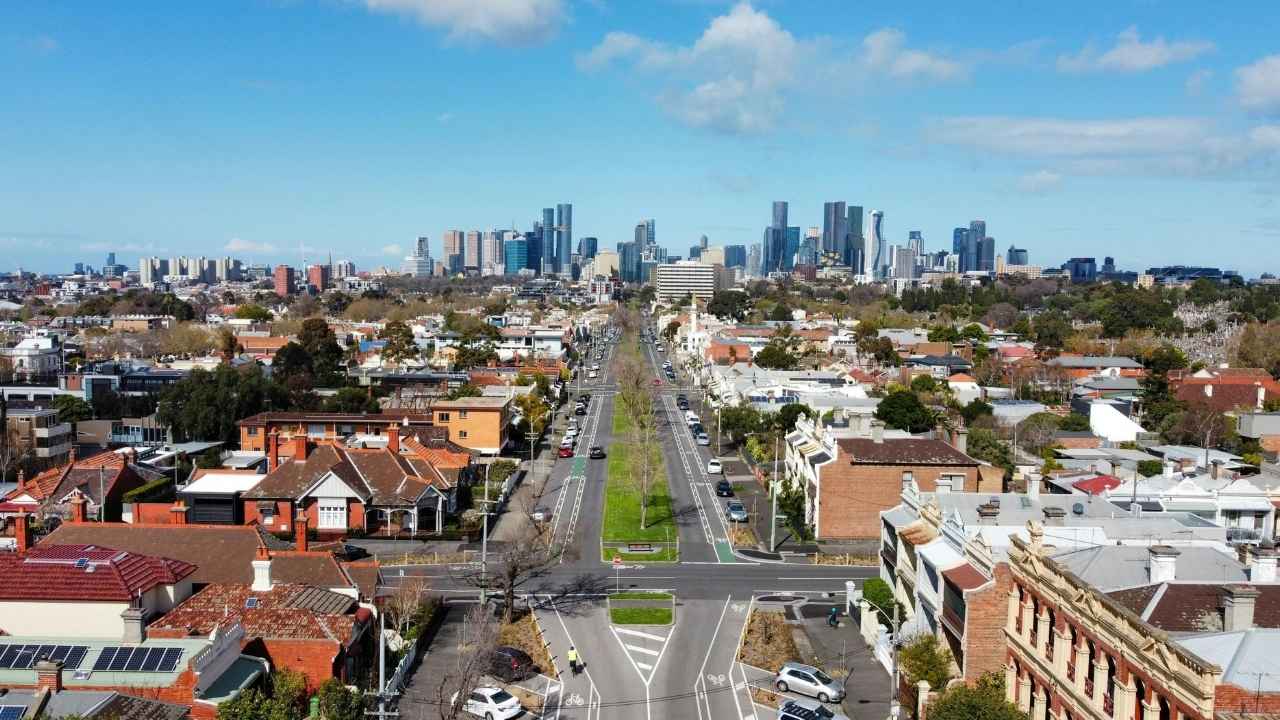
For months, the Melbourne property conversation has hovered somewhere between optimism and denial.
Yes, the city has improved from its weakest patch. Yes, there are still buyers in the market. Yes, long-term fundamentals like population growth and relative value still matter. But that does not mean Melbourne is mounting some broad, confident recovery.
Right now, the better description is this: Melbourne is repricing.
And that matters, because a repricing market behaves very differently from a rebounding one.
The latest realestate.com.au reporting showed Melbourne’s median house price was flat in March, with annual house growth of just 3.1%, making it the weakest-performing capital city on that monthly measure. The same report noted Adelaide’s median house price had edged above Melbourne’s, which would have been hard to imagine not that long ago. Units, however, performed better, with Melbourne unit values up 0.6% over the month and 4% over the year to a median of $633,000.
That is not the profile of a market surging upward with broad-based confidence. It is the profile of a city where buyers are still active, but where they are becoming much more selective about where they spend, how far they stretch and what they expect in return.
"“Melbourne is not moving as one market. It is splitting into separate stories based on price point, location and borrowing pressure.”"
Melbourne’s premium housing story is losing momentum
One of the clearest takeaways from the latest reporting is that Melbourne’s softer performance is being driven largely by inner suburbs and the inner and outer east, with premium areas proving more exposed to higher borrowing costs. PropTrack economist Eleanor Creagh told realestate.com.au that higher-end markets tend to be more vulnerable when the cost of finance rises, and Melbourne is now reflecting exactly that.
That makes sense.
Prestige and premium markets rely more heavily on buyers who are either taking on larger debt loads or who are more sensitive to the cost of capital, even when they are relatively affluent. When rates stay high and confidence becomes patchy, those buyers do not necessarily disappear, but they do start negotiating harder, hesitating longer and refusing to blindly chase ambitious prices.
For sellers in these parts of Melbourne, that is a problem. For buyers, it can be an opportunity.
This is where a lot of generic market commentary falls apart. Saying “Melbourne is recovering” ignores the fact that some parts of the city are clearly under more pressure than others. A prestige market slowdown is not the same thing as a broad city-wide downturn. But it is also not something buyers should dismiss as irrelevant.
It tells us that the old assumption that quality suburbs will always power ahead regardless of rates is being tested. And in a high-cost environment, even expensive, desirable suburbs are not immune from repricing.
Affordable stock is telling a very different story
What makes Melbourne genuinely interesting right now is that the weakness is not universal.
The same realestate.com.au report pointed to stronger performance in more affordable parts of the market, especially units and lower-entry-price homes. It also cited buyers’ agents saying homes under $750,000 were moving quickly, while stock above $1.5 million was sitting for longer.
That is a very different story from the simplistic idea that Melbourne is either “back” or “not back”.
What it really shows is that affordability is doing the heavy lifting.
Buyers are still willing to commit, but they are doing so where the numbers feel manageable. That includes first home buyers, downsizers and more budget-conscious owner-occupiers who are prioritising repayment comfort over prestige. The report also linked part of the demand support to first-home buyer activity and schemes such as the First Home Guarantee.
So the market is not rewarding every segment equally. It is rewarding realism.
That is why broad recovery headlines can be misleading. Melbourne is not enjoying a clean upswing. It is sorting buyers and sellers into two camps:
- those operating in realistic, finance-sensitive price brackets
- those still trying to price off old momentum and outdated assumptions
Melbourne is starting to look like value again
One of the more interesting shifts in the article is that some buyers are now cashing out of stronger, more expensive growth markets and seeing Melbourne as relative value.
realestate.com.au reported examples of buyers relocating from Queensland to
#image_title
Melbourne to reduce mortgage pressure and regain some financial breathing room. That tells us Melbourne’s place in the national housing conversation has shifted. It is no longer just one of the “big expensive” capitals. Increasingly, it is being viewed as a major city where pricing looks comparatively rational against other markets that ran harder through the pandemic-era boom.
That does not mean Melbourne is cheap. It means it is beginning to look more defensible.
And in a market where household budgets are tight, borrowing power is constrained and global uncertainty is feeding into consumer caution, relative value matters.
This is where Melbourne may quietly become more attractive than the headlines suggest. Not because the market is roaring back, but because it is no longer demanding the same blind optimism from buyers. In many parts of the city, the market is asking harder questions about value, liveability and financial sustainability. That is a healthier dynamic than many buyers have dealt with elsewhere.
What buyers should take from this market
The takeaway is not that Melbourne is weak and should be avoided.
The takeaway is that Melbourne is now a city where buyers need to be more specific and more strategic.
That means:
- not confusing city-wide softness with a universal bargain
- not assuming premium suburbs will behave the same as affordable ones
- not relying on “Melbourne always comes back” as a substitute for proper analysis
- not stretching borrowing capacity simply because Melbourne feels cheaper than Sydney or Brisbane
For owner-occupiers, this market can create genuine opportunity if expectations are grounded. Buyers with finance sorted, a clear brief and a strong understanding of their repayment comfort zone may find better value now than they would in a market driven by panic and competition.
For first home buyers, Melbourne’s more affordable segments may offer a more realistic way in than some other capitals, but that does not remove the need for discipline. Repayment buffers still matter. So does choosing a property that suits your life beyond the next six months.
For upgraders, the key question is whether the gap between what you own and what you want has become more manageable. In a market where premium stock is softer, that gap may be less intimidating than expected.
Investors need to be careful with the “value” story
Investors should be cautious about lazy narratives around Melbourne now being “good value”.
A city can offer relative value and still contain plenty of mediocre assets.
If the current market is showing anything, it is that buyers are rewarding affordability, but they are also rewarding asset quality, location and practical liveability. Investors still need to assess:
- local supply risk
- tenant demand
- holding costs
- vacancy pressure
- whether the asset sits in the part of the market that is actually performing, rather than the part being propped up by old reputation
There is a big difference between buying into a city that looks cheaper than others and buying a genuinely strong asset within that city.
Melbourne right now is punishing overconfidence. It is also exposing the gap between the prestige narrative and what buyers can actually afford.
This is no longer a one-speed property market
The most useful way to understand Melbourne right now is not as a market that is weak or strong.
It is a market that is fracturing.
Affordable homes and units are still moving. Some first home buyers are still active. Some interstate buyers are seeing opportunity. Meanwhile, premium homes and expensive suburbs are facing a much tougher environment.
That is not a broad rebound. It is a split market.
And in split markets, generalisations become dangerous.
Buyers who understand that will be in a much better position than buyers still relying on sweeping market clichés. Melbourne is no longer a city where one headline can tell you everything you need to know. It is becoming a market of winners and laggards, and the difference between the two comes down to price point, finance pressure and asset selection.
That is why the strongest buyers in Melbourne right now are not the most optimistic ones. They are the ones asking better questions.
If you want clearer guidance before your next financial move, speak with UFinancial. We can help you review your lending, cash flow and broader financial position so your next decision is backed by strategy, not guesswork.

